Artemis II, a success with a bitter taste
They’re back safe and sound!
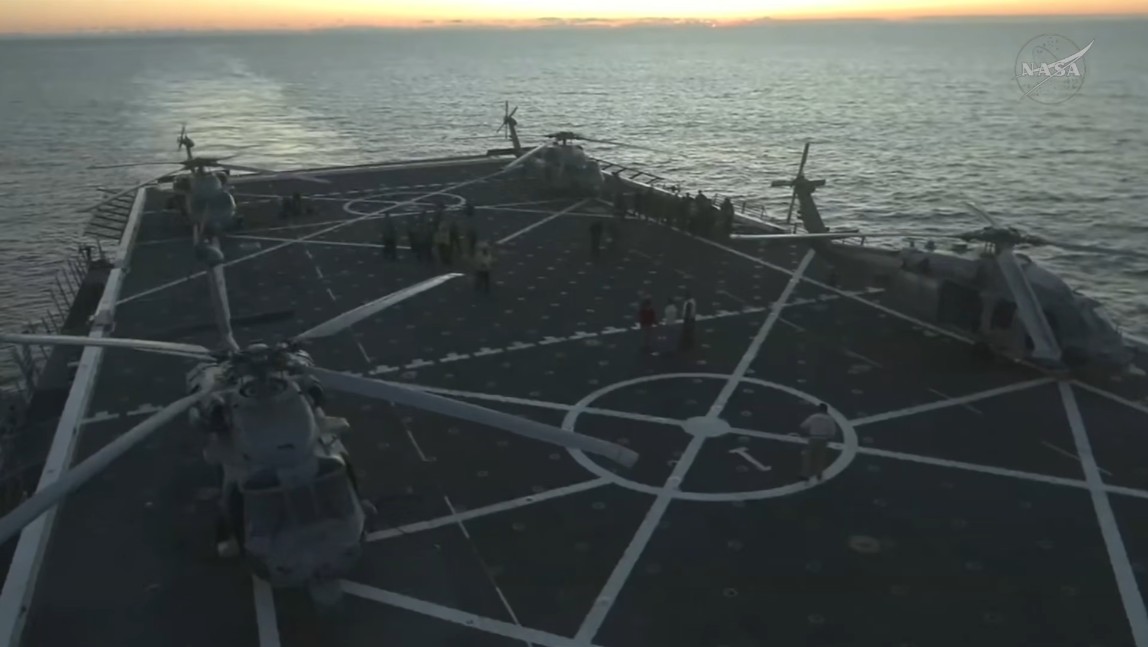
Yesterday evening, April 10th, at 7:07 AM Pacific Time (this morning, April 11th, at 4:07 AM Western European Time), the astronauts of the Artemis mission touched down on the sea off the coast of California, as expected. They are in good condition, and the landing went smoothly after a 10-day journey around the moon in their « Integrity » capsule.
However, I could not get excited about this mission. I can only see it as a « remake, » putting full light on the refusal of political leaders to pursue our journey to the stars as we so heartily hoped to, in 1968. Remember « 2001: A Space Odyssey, » released that same year, and look where we are today!
I am well aware that it was necessary to go through this process again (lunar orbiting) in order to be able to go further. But I’m eager to see humans at least on the Lunar surface rather than just turning around it, while still fearing that we might linger there indefinitely instead of going to Mars, and that our satellite might turn out to be the “siren” Robert Zubrin feared it would become in the 1990s. The danger, in fact, is that we might persist in settling there where it serves no purpose, since, given the Moon’s proximity (no time lag) and our technological progress, we can do there whatever we want, using robots. This technological capability justifies not having to endure the inconveniences of living there.
Another motive of bitterness is that this mission reveals that the « wok » mentality is alive and well in the United States. Why did NASA highlight the skin color and nationality of the passengers in its announcements? I understand that women are distinguished from men because they are biologically different, and it’s important to know comparatively how they tolerate radiation and how we can protect them. But frankly, what scientific value is there in choosing a Black person for the crew simply because he is Black, or a Canadian because he is not American? Absolutely none.
Another disappointment: the scientific content of the mission.
I just wrote a series of articles on my blog highlighting the dangers of radiation and the benefits for astronauts of wearing AstroRads protective vests. These vests, designed by the company StemRad, proved their effectiveness on the dummies on board the Artemis I mission. We could have, and indeed should have, equipped the members of the Artemis II mission with these vests. It seems that NASA gave up the idea on account of mass constraints. It’s true that these vests are « heavy »: 22 to 27 kg. But what does mass matter in zero gravity? And if their volume was a problem, NASA could have loaded three people (including a woman!) instead of four, or better yet, given a vest to one or two of them, for example the more vulnerable woman, and compared the results of the effects of radiation exposure at the end of the mission. These comparisons are very frequently made in medicine to evaluate a drug or treatment. Why wasn’t this done?
Indeed, each astronaut carried radiation sensors (dosimeters) in their pockets to monitor their exposure in real time. Combined with the six radiation sensors installed in the module, these instruments were able to detect sudden increases in radiation and alert the crew so they could have taken protective measures (i.e. make an improvised shelter using supplies and equipment). We are currently very close to the solar maximum (we went through it last summer) and are slowly descending towards the minimum, which we won’t reach until 2030. Solar storms are most frequent at and around this maximum. What would we have done if one occurred during these ten days? Was it worth taking the risk of not protecting our astronauts with an AstroRad vest, a tested and efficient equipment? Certainly not.
Let’s look at the other elements of the scientific program: AVATAR and ARCHeR.
AVATAR (“A Virtual Astronaut Tissue Analog Response”) uses organ-on-a-chip devices, or « organ chips, » to study the effects of microgravity and increased radiation on human health.
First, consider the study of microgravity and its effects on health. It has been conducted for decades on the ISS. Doing it now within the Orion capsule changes absolutely nothing and does not justify to do it. That is really a poor idea (and, by the way, for a long time we should have worked on the feasibility of artificial gravity through rotation).
I have mixed feelings about the use of organ-chips because humans haven’t physically returned beyond the Van Allen Belts since the Apollo missions and we had to study the dose incurred in this area. These chips contain living human cells cultured to replicate the specific structures and functions of human organs, such as the brain, lungs, heart, pancreas, and liver: they can beat like a heart, breathe like lungs, or metabolize like a liver. They can even be assembled to mimic the interactions between organs, which is essential for understanding how the human body functions. In this case, the Artemis II mission used organ chips created from “hematopoietic” stem (non-specialized cells that can transform into any type of blood cell) and progenitor cells, taken from the bone marrow of crew members.
That’s all well and good, but I still don’t see what prevented the use of an AstroRad protective vest in this mission, and furthermore, I don’t see why send astronauts if we can send organ chips instead. One could argue that the test will validate the value of the chips by comparing their evolution with that of human cells. I don’t consider that what worth taking the human risk but it’s all the better if we could take advantage of the mission to test them.
ARCHeR (Artemis Research for Crew Health & Readiness) is simply a behavioral study of the astronauts during the mission. It’s reasonable to conduct this study, but it’s also fair to say it won’t reveal much more than what we learn every day during stays on the ISS.
The three risks being studied are: (1) The risk of decreased mission performance and deteriorating behavioral health due to insufficient cooperation, coordination, communication, and psychosocial adaptation within a team; (2) The risk of decreased performance and adverse health consequences related to sleep deprivation, circadian rhythm disruption, and workload; and (3) The risk of undesirable cognitive or behavioral changes and psychiatric disorders leading to health and performance repercussions during the mission and long-term health effects.
As part of the ARCHeR project, crew members wore wrist-mounted devices that monitor their stress levels, movement, sleep, and cognitive performance. The real scientific innovation brought about by this journey was having this highly detailed, real-time information. It will be useful for preparing future missions to the Moon…but less so for missions to Mars, since there will no longer be so called « real-time » on account of “time lag”.
Another study focused on the immune system. During the mission, astronauts collected saliva samples by depositing them on special paper kept in small notebooks (this method was necessary because Integrity did not have a refrigeration system). Compared to samples taken before and after the flight, this samples will allow researchers to track immune changes related to stressors such as radiation and isolation. Scientists also looked to see whether dormant viruses reactivated during the flight, particularly those related to chickenpox and shingles. This reaction was already observed aboard the ISS and maybe a stronger level of radiation would have triggered a stronger one?
In conclusion, nothing extraordinary. Let’s say the main interest (and it’s not insignificant) was to better study the radiation effect beyond the Van Allen Belts, since this hasn’t been done on humans since Apollo 17 (1972).
Astronautics:
In this respect, the reliability of the Orion capsule was a cause for concern. It’s worth remembering that at the end of the Artemis I mission, during atmospheric reentry, the heat shield of this same capsule exhibited significant and unexpected degradation. This time, it seems to have held up (although the surface of the shield still needs to be closely examined).
Above all, the SLS system is expected to be phased out soon, since SLS launchers are not reusable and are very expensive. Therefore, using vehicles that will sooner or later be decommissioned is of little practical use.
Still the Artemis II mission provided us some very beautiful photos (including the photo here below, credit NASA). Let us admire them, dreaming of something more interesting!
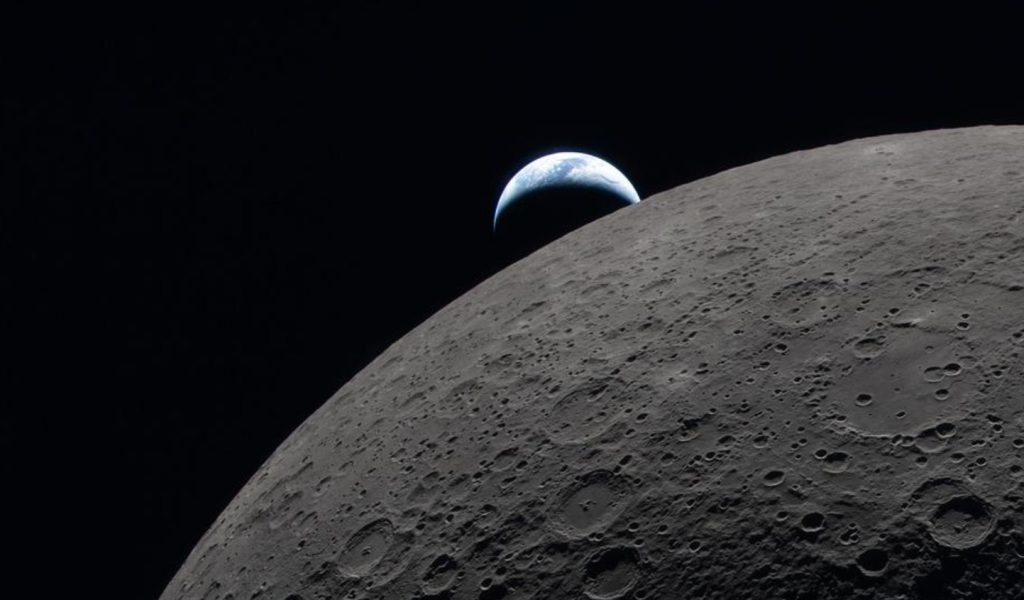
Title photo (“All is well that ends well!”)
Links:
Space.com article :
Astrorad :
others
https://www.nasa.gov/reference/archer/
https://science.nasa.gov/biological-physical/investigations/avatar
https://www.space.com/astronaut-bone-loss-jumping-exercise-study
https://www.nasa.gov/humans-in-space/artemis-ii-crew-to-advance-human-spaceflight-research/
https://www.nasa.gov/reference/immune-biomarkers/
https://www.cite-espace.com/actualites-spatiales/la-capsule-orion-plus-endommagee-que-prevue
Copyright Pierre Brisson

