Starship’s IFT13, a very encouraging test flight
During the night (in Europe) of July 24 to 25, 2026, SpaceX demonstrated with IFT13 that major progress has been made since IFT12. The most spectacular moment was the ship’s splashdown, but it is no exaggeration to say that almost the entire flight went well, with only one very small caveat concerning the booster’s splashdown in the Gulf of Mexico.
After several postponements, liftoff from Starbase (Boca Chica, on the Texas/Mexico border) took place right on schedule. The postponements were justified by the value of having excellent visibility to observe the rocket over its first kilometers through the atmosphere, and the weather above Starbase was superb.
Liftoff was flawless, showing off the new launch platform. It truly deserves to be called an anvil, so compact and solid is it. The flame trench beneath it, lined with pipes delivering the deluge water, is an admirable feat of ingenuity. The power of the deluge, ejecting 650,000 gallons (2,460,000 liters) per minute, once again proved its effectiveness.
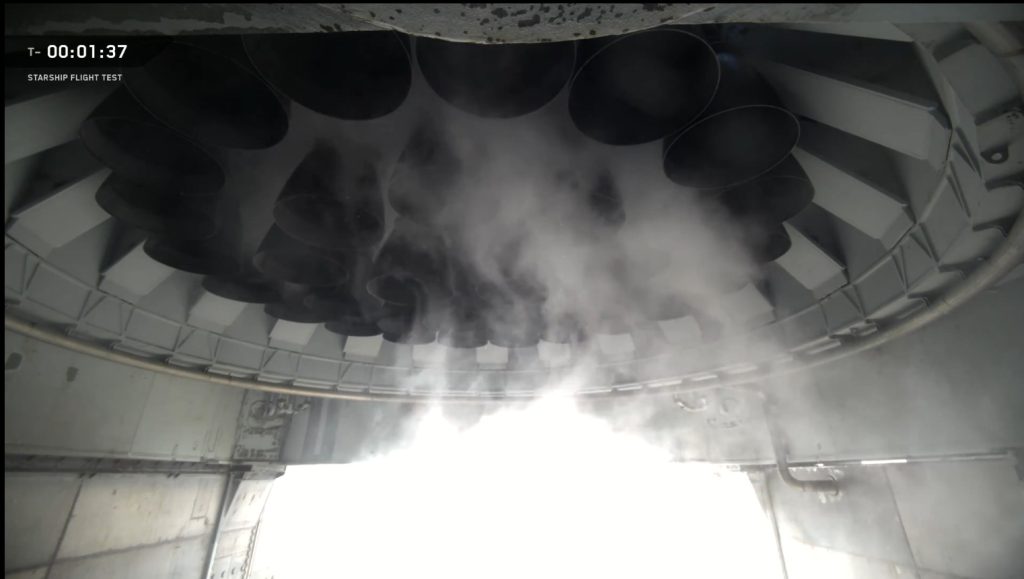
The climb away from the ground, powerful and swift, took place with all 33 engines burning steadily. It was an opportunity to admire the new Raptor V3 engines, sleek and gimbaling. Max Q (maximum mechanical stress) was then passed without any problem. The separation (hot staging) of the booster (Booster 20) from the ship (Ship 40) went smoothly.
We then witnessed the only caveat of the entire IFT: a somewhat rough splashdown of the booster in the Gulf of Mexico (only 8 engines ignited, and 3 of them shut down very quickly).
Then, as planned, the ship was able to relight one of its Vacuum engines for a controlled duration (14 seconds) and, at its maximum altitude (198 km), it released its 20 trays of Starlink satellites.
The descent was very clean (no heat-shield tiles torn off, as had happened before). The 3 Sea Level engines were relit as planned, at an altitude of 900 m (3,000 ft) and at 365 km/h (227 mph), which demonstrates the effectiveness of atmospheric braking and of the thermal protection on the ship’s belly. NB: the ship started from a cruising speed of over 26,500 km/h, after a maximum of 28,800 km/h.
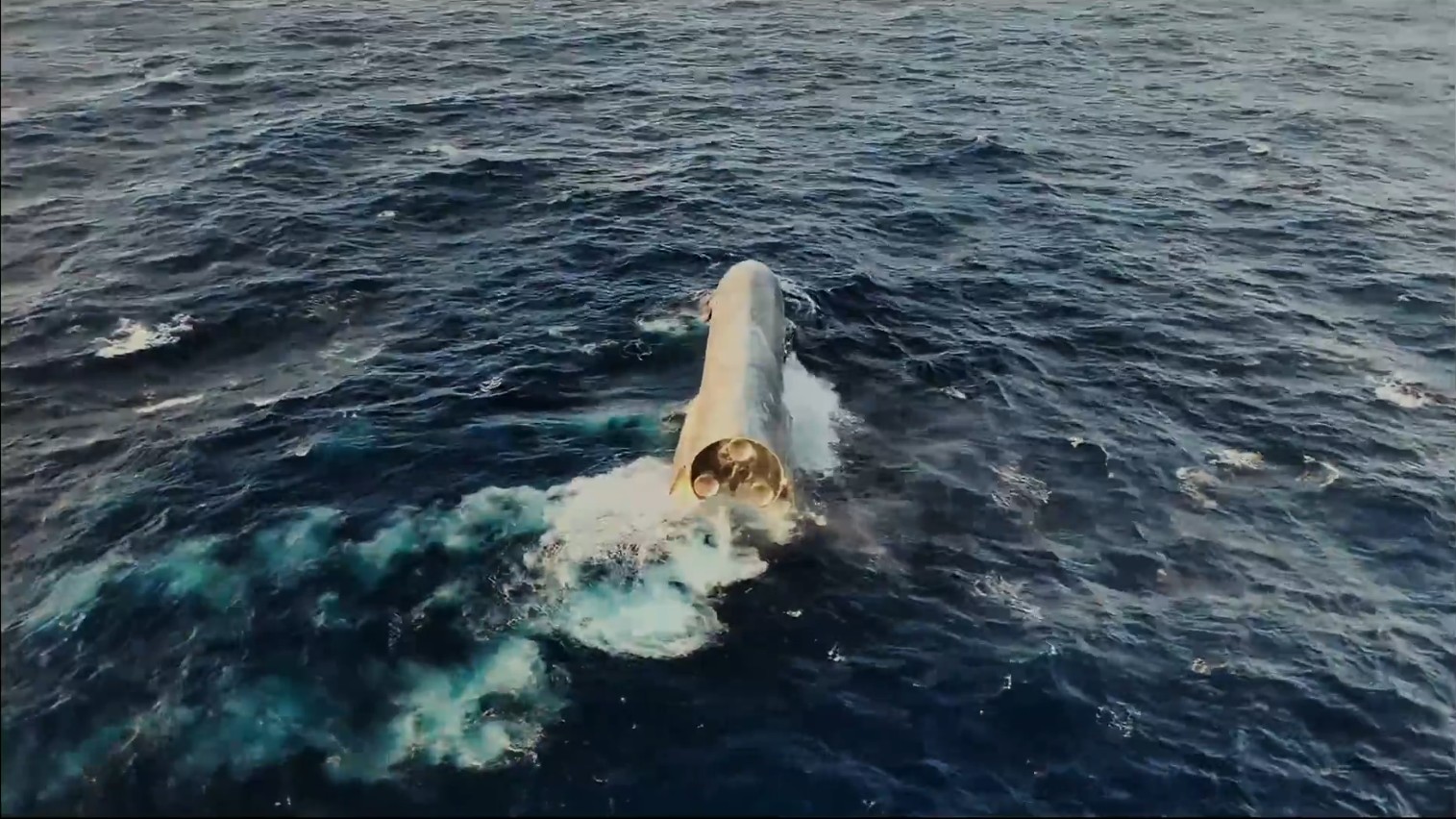
The ship’s splashdown was the highlight of the show. Indeed, it touched down as never before, perfectly vertical and, above all, with extreme gentleness. So much so that it lay down on the water without exploding and began to float. The photos show that it suffered no damage, only surface heating marks on the tiles. It will be recoverable for analysis.
IFT13 is a magnificent success that gives every reason for hope for what comes next.
On to Mars! as we say in the Mars Society
https://www.spacex.com/launches/starship-flight-13
Title illustration: photo taken by NASA a few minutes after landing.
Illustration hereunder: The 33 Raptor Motors of the Booster B20:
xxxx
To find another post in this blog which could be of interest for you, click on:
xxxx
And, if you enjoy this blog, subscribe (it’s free)!

